
Blog Writing for SEO: How to Write Articles That Rank and Bring Leads
Plenty of business blogs get written and never read. Here's how to write articles that rank on Google and turn readers into enquiries.

A business blog can be a steady lead source or a forgotten folder of articles nobody reads. The difference comes down to topic choice, structure and what happens at the end of each article.
Step 1: Choose topics people search for
Good topics sit where customer questions meet your services. Sources:
- Questions customers ask on calls and WhatsApp.
- Google's autocomplete and "People also ask".
- Google Search Console queries your site already appears for.
- Competitor articles that rank.
Prefer topics with buying relevance. "How much does a website cost in India?" is more valuable to a web agency than "History of the internet."
Step 2: Study what already ranks
Search your topic. Read the top results. Ask:
- What do they all cover?
- What's missing, outdated or vague?
- What format works: guide, list, comparison, how-to?
Your goal is to write the most useful page on that topic, not a copy of the others.
Step 3: Outline with the answer first
- Title: includes the main keyword and a clear benefit.
- Opening: acknowledge the reader's problem in two or three sentences.
- Direct answer: a short paragraph that answers the question. This helps featured snippets and AI answers.
- H2 sections: the main parts of the answer.
- FAQs: related questions with short answers.
- Call to action: the natural next step.
Step 4: Write for people, optimise for search
- Use the main keyword in the title, URL, first paragraph and at least one heading, naturally.
- Use related terms and synonyms instead of repeating one phrase.
- Write short paragraphs and simple sentences.
- Add your experience: real examples, local context, mistakes you've seen.
- Include images, diagrams or screenshots with descriptive alt text.
- Use bullet lists and numbered steps where they make reading easier.
Step 5: Fill in the SEO details
- Meta title: around 50 to 60 characters, keyword near the start.
- Meta description: around 150 to 160 characters, a clear benefit and reason to click.
- URL: short, readable, keyword-based.
- Schema: Article and FAQ structured data.
- Featured image: sized for sharing, with an image title and alt text.
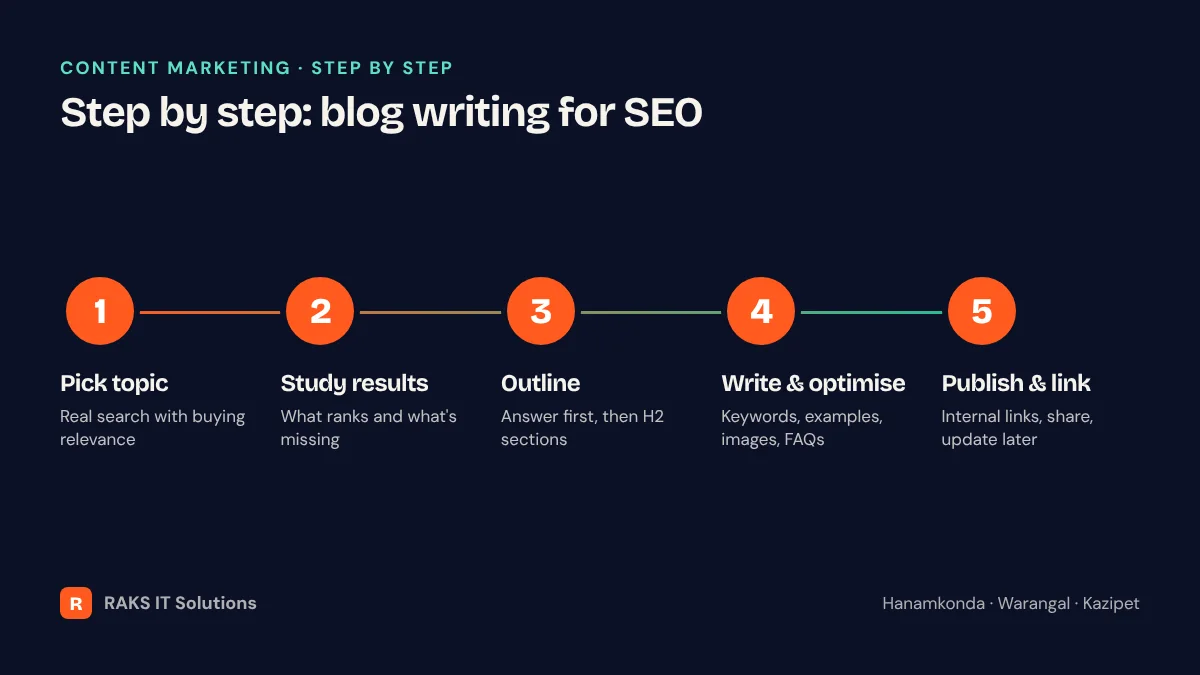
Step 6: Connect articles to your services
Every article should link to the related service page and one or two related posts. In the conclusion, offer a clear next step: a free audit, a consultation, a WhatsApp chat. This is where readers become leads.
Step 7: Promote and update
Share the post on social media, WhatsApp, email and Google Business Profile. Review performance after three months. Update articles that are close to page one with fresh information, better examples and more FAQs.
Mistakes that keep blogs invisible
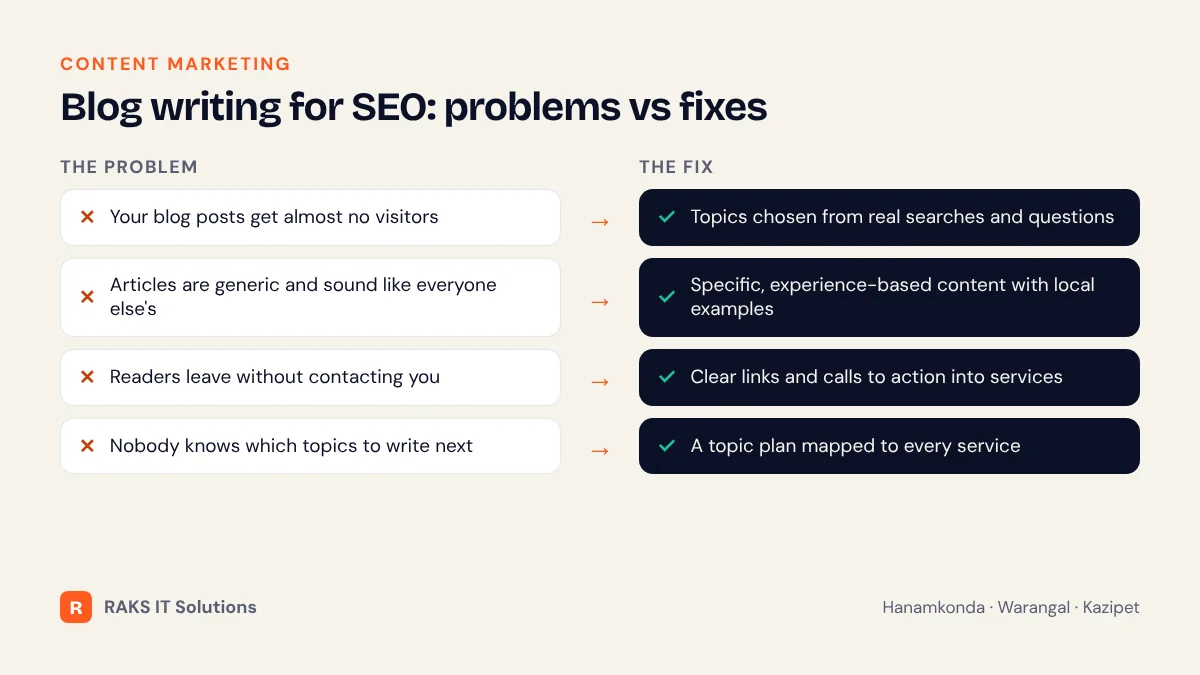
- Writing about what you want to say, not what customers search.
- Thin, generic articles with no real experience.
- No internal links or call to action.
- Publishing and never updating.
The bottom line
A blog that ranks and converts is built on real questions, genuinely helpful answers and a clear path to your services. Write fewer, better articles, connect them to what you sell, and keep improving the ones that gain traction. Our content creation service handles the research, writing and optimisation.
