
Digital Marketing Strategy for Small Businesses: A Step-by-Step Plan for Growth
Random posts, a few boosted ads and a website nobody updates isn't a strategy. Here's a simple step-by-step plan that connects marketing to growth.

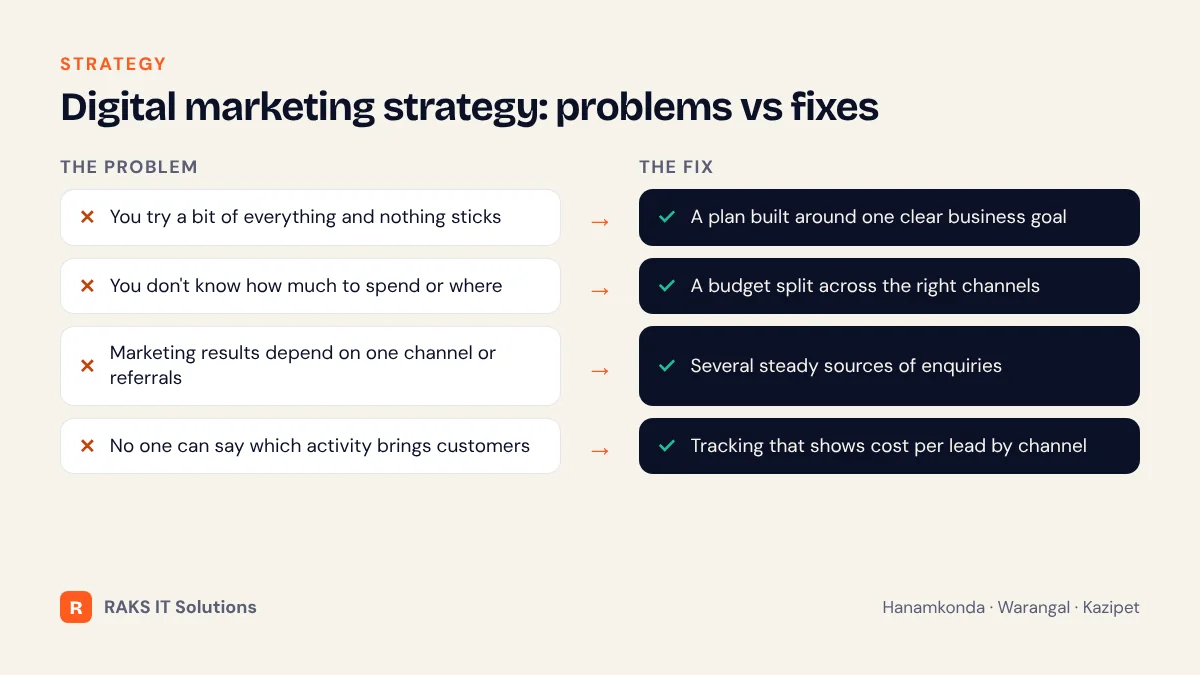
Many small businesses do some digital marketing. A few posts here, a boosted ad there, a website made years ago. When results are unclear, it feels like digital marketing "doesn't work for our business."
Usually, the issue isn't the channels. It's the lack of a strategy connecting them.
Step 1: Set one clear business goal
Start from the business, not the platform. Examples:
- "Get 60 qualified enquiries a month for our clinic."
- "Fill 3 new batches of 30 students this academic year."
- "Book 15 site visits a month for our new project."
A specific goal tells you what to measure and how much you can sensibly spend to achieve it.
Step 2: Understand your customer's journey
Who decides? What triggers the need? Where do they search or scroll? What questions do they ask? What makes them choose one business over another?
Talk to existing customers. Their answers shape every channel decision.
Step 3: Fix the foundations
Before spending on promotion, make sure:
- Website: clear, fast, mobile-friendly, with service pages and easy contact.
- Google Business Profile: complete, accurate, with reviews.
- Tracking: Google Analytics, Search Console, ad pixels and a simple way to record every enquiry and its source.
- Response process: someone replies to calls, forms and WhatsApp quickly.
Promotion without foundations leaks money.
Step 4: Choose two or three channels
Match channels to your customer:
- People search for your service: SEO, local SEO and Google Ads.
- People need to see you before buying: Instagram, Facebook, reels, YouTube.
- B2B or professional services: LinkedIn, content and email.
- Repeat customers: WhatsApp broadcasts, email, offers.
Do a few channels well rather than many poorly.
Step 5: Set budget and content plan
Split your budget between:
- Quick-result channels (ads) for immediate enquiries.
- Long-term channels (SEO, content, social) that lower costs over time.
Then plan content monthly: what you'll publish, promote and test.
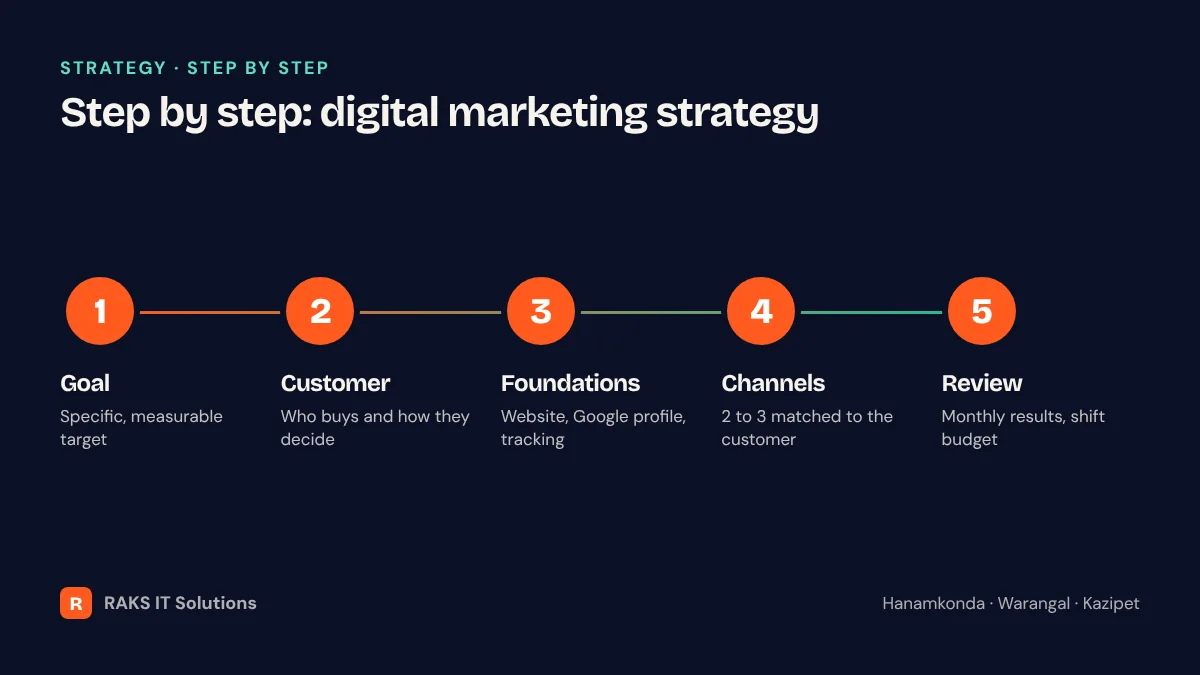
Step 6: Measure and adjust monthly
Each month, review for each channel:
- Spend.
- Leads.
- Cost per lead.
- Leads that became customers.
- Revenue or value from those customers.
Move budget toward channels with the best results. Fix or stop what isn't working. Review the overall strategy every quarter.
A simple example
A new dental clinic in Hanamkonda might start with:
- Foundations: website with treatment pages, Google profile, review routine, call tracking.
- Quick wins: Google Ads for "dentist near me" and specific treatments.
- Trust: two reels a week on oral care and patient stories.
- Long term: local SEO and FAQ articles for each treatment.
- Retention: WhatsApp reminders for check-ups.
The bottom line
A strategy turns scattered activity into a growth system: clear goal, strong foundations, a few well-chosen channels and monthly decisions based on real numbers. If you'd like help building one, see our digital marketing consultant in Warangal.
