
Website Speed and Mobile Experience: How They Decide Whether Visitors Become Customers
Most of your visitors arrive on a phone, often on patchy mobile data. If your site is slow or awkward, they leave before you get a chance. Here is what to fix.

Picture a customer standing in a shop queue, phone in hand, searching for a service. They tap your link. The screen stays white. One second, two, three. They hit back and tap the next result. You never knew they existed.
That is how most lost enquiries happen: quietly, in the first few seconds.
Why speed matters more than most owners think
People are impatient on phones, and they have every reason to be. There are always other options one tap away. A slow page doesn't just annoy visitors; it filters them out before they have seen your offer, your work or your prices.
Speed also affects:
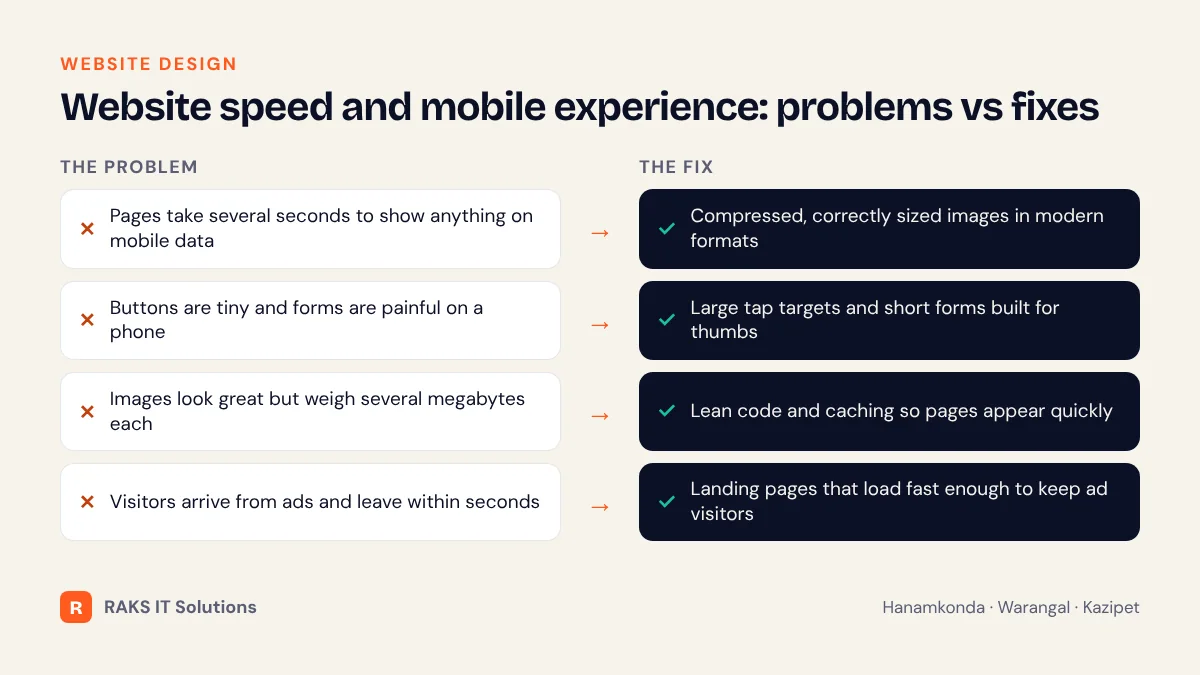
- Ad costs. When you pay for clicks, a slow landing page means paying for visitors who leave before the page loads. Google Ads also considers landing page experience, which influences how much you pay.
- Rankings. Google measures real-world page experience through Core Web Vitals (loading, responsiveness and visual stability) and uses it as one of its ranking signals.
- Trust. A site that feels sluggish or jumps around while loading feels less professional, even if the design is lovely.
Mobile experience: designing for thumbs, not mice
A site can load quickly and still be hard to use on a phone. Common problems:
- Text that needs zooming to read.
- Buttons so close together that people tap the wrong one.
- Forms with ten fields and a tiny submit button.
- Pop-ups that cover the whole screen and are hard to close.
- Phone numbers that aren't tappable.
A mobile-first website flips the approach. It is designed for the small screen first, then expanded for desktops. Key actions (call, WhatsApp, enquire) stay within easy reach, often in a sticky bar at the bottom of the screen.
The practical fixes that make the biggest difference
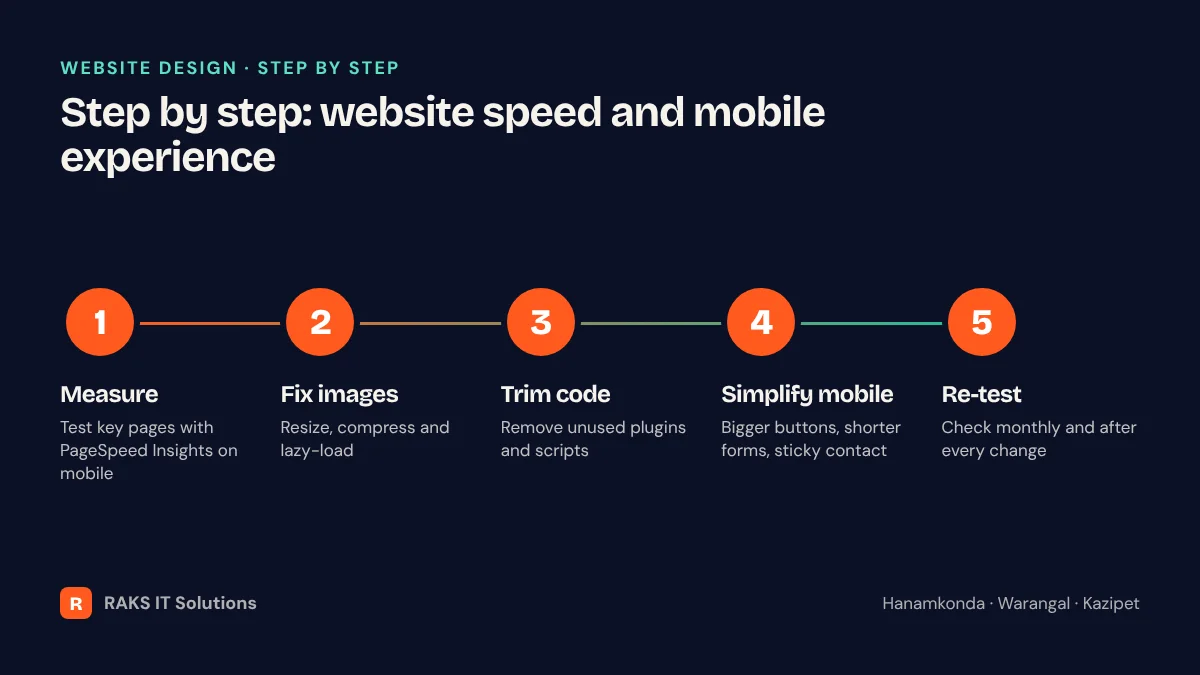
1. Images
Images are the most common reason pages are heavy. Photos straight from a phone or camera can be several megabytes each. Resizing them to the size they're displayed at, saving them as WebP and lazy-loading images further down the page often cuts page weight dramatically.
2. Plugins and scripts
Every chat widget, slider, tracking script and plugin adds weight. Keep the ones that earn their place and remove the rest. Load the essential ones after the main content.
3. Hosting and caching
Good hosting and page caching mean the server can send pages without rebuilding them for every visitor. Even on shared hosting, caching makes a visible difference.
4. Fonts and layout shifts
Too many font files slow things down, and elements that jump around while the page loads frustrate users. Reserve space for images and limit fonts to what the design really needs.
5. Short, focused forms
Ask only what you need to reply: name, phone, and what they're looking for. You can collect the rest in the conversation.
How to know it's working
Track a few simple numbers before and after the changes:
- Mobile PageSpeed score and Core Web Vitals for your main pages.
- Bounce rate or engagement rate from mobile visitors in Google Analytics.
- Number of calls, WhatsApp clicks and form submissions per week.
When the site gets faster and easier to use, you typically see visitors staying longer and more of them getting in touch, without spending a rupee more on traffic.
Local businesses feel this most
In Warangal, Hanamkonda and Kazipet, a large share of customers search on mobile data while they're out and about. They want the phone number, the location and a quick idea of price. If your site gives them that in seconds, you win the enquiry. Our website design service in Hanamkonda builds every site mobile-first for exactly this reason.
The bottom line
Speed and mobile experience are not technical extras. They decide how many of the people you've already attracted actually become customers. Fixing them is often the cheapest growth win available.

