
What Is GEO? Making Your Brand Visible in ChatGPT, Gemini and Perplexity
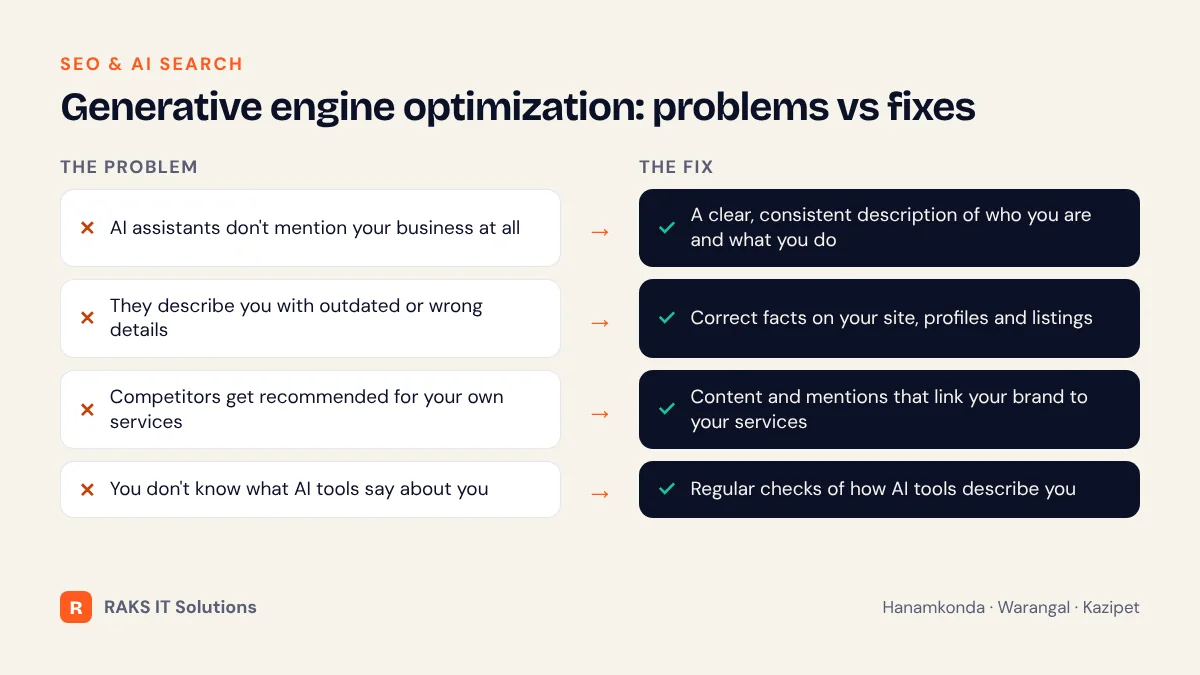
More people now ask AI assistants which business to choose. Generative engine optimization (GEO) helps those assistants know who you are and when to recommend you.

"Which digital marketing agency should I use in Warangal?" "What's a good physiotherapy clinic in Hanamkonda?" People are asking questions like these to AI assistants every day, and they often act on the first suggestion.
If the assistant doesn't know your business, or knows it wrongly, you're not part of that decision.
How AI assistants decide what to say
AI assistants build answers from what they've learned and, increasingly, from live web searches. They tend to mention businesses that are:
- Clearly defined: it's obvious what the business is, what it does and where.
- Consistently described: the same name, services and details appear across many sources.
- Credible: reviews, mentions on other sites and real, detailed content back up the claims.
- Easy to read: well-structured pages with direct answers and structured data.
GEO is the work of strengthening each of these.
Step 1: See what AI tools say about you now
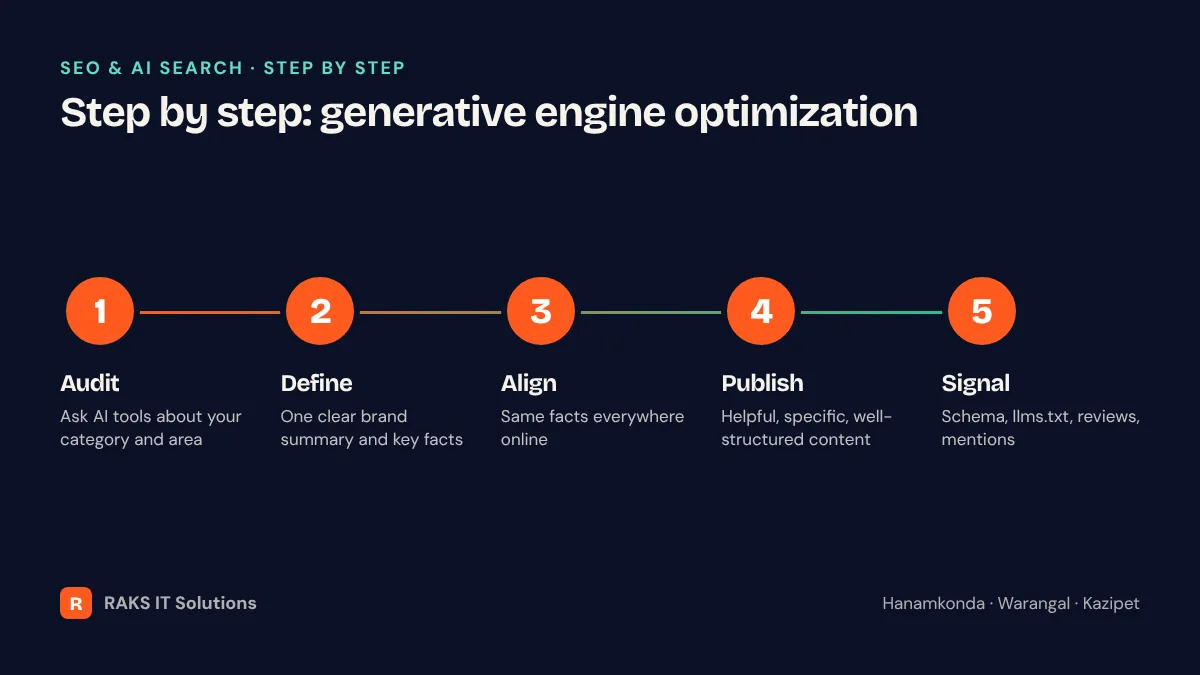
Ask ChatGPT, Gemini, Perplexity and Copilot questions a customer would ask: your service plus your city, comparisons, "best" questions. Note whether you appear, what they say, and which sources they cite. This is your baseline.
Step 2: Write one clear brand summary
Create a short, factual description: who you are, what you do, who you serve, where you operate, and what makes you different. Use it consistently on your website's about page, Google Business Profile, social profiles and directory listings.
Step 3: Publish key facts plainly
AI systems like crisp facts: services offered, areas served, year founded, opening hours, price ranges, team expertise. Put them where both people and machines can find them, such as a key facts section on service pages.
Step 4: Create content that proves expertise
Generic content doesn't help. Specific, helpful content does: guides that answer real questions, explanations of how you work, examples of projects and results, local information. This gives AI tools something worth citing.
Step 5: Use structured data and llms.txt
- Schema markup (Organization, LocalBusiness, Service, FAQ, Article) describes your business in machine-readable form.
- llms.txt is a simple file that summarises your business and lists your most important pages for AI tools. It's an emerging convention, easy to add, and helps present your information cleanly.
Step 6: Earn mentions beyond your website
Reviews on Google, listings on reputable directories, features in local news, partner websites, association pages and industry discussions all reinforce what you say about yourself. AI tools trust what multiple independent sources agree on.
How GEO connects to growth
AI-assisted searches often come from people who want a shortlist quickly. Being named in that shortlist puts you in front of buyers at a decisive moment, with an implied recommendation attached. As more people use AI tools to research, this visibility becomes a real source of enquiries.
Keep expectations realistic
GEO is still young and AI answers vary between tools and even between identical questions. Nobody can guarantee a mention. What works is steady, honest groundwork: consistent facts, useful content and real reputation signals.
The bottom line
GEO doesn't replace SEO; it extends it. The same strong website and reputation that help you rank also help AI assistants understand and recommend you. Start by checking what they say about you today. Our SEO service in Kazipet and across the Tri-City includes AEO and GEO work as standard.


